Bail looks basic on paper: a court sets an amount, the accused blog posts it or uses a bondsman, and the situation moves forward without a job behind bars. In method, criminal history threads through every decision point. Juries evaluate it when setting bond and problems, district attorneys cite it when arguing apprehension, pretrial solutions use it in risk assessments, and bail bond companies translate it into premiums, security requirements, and whether to write the bond whatsoever. If you have a record, the course to pretrial launch changes shape, occasionally discreetly, often dramatically.
I have actually sat across from family members who brought pay stubs, titles, and an earnest assurance to assist a loved one prosper on bond, just to discover that a decade-old probation infraction or a bench warrant from another state turned a routine documentation hour into an all-night scramble. Criminal background does not automatically lock somebody behind bars, yet it transforms the math, and every person at the table understands it.

What "criminal background" in fact implies in bond decisions
Most individuals think about convictions, however the system checks out background a lot more extensively. When a judge or a bondsman reviews an offender, the record commonly consists of apprehensions that did not bring about sentence, rejected charges, prior failings to appear, probation or parole condition, limiting orders, warrants, and pending cases in other jurisdictions. Some states restrict the weight of disregarded charges, others enable judges to consider them as component of a pattern. Federal courts rely upon the Bond Reform Act and structured risk analyses, yet also there, the appearance of the previous matters: the type of infraction, just how recent, whether violence or tools were included, and whether the defendant followed prior supervision.
Two categories in the background have a tendency to control the discussion. The very first is appearance danger: did the person come back to court in the past? The second is public safety risk: did prior conduct entail violence, hazards, guns, or serious medicine trafficking? Bondsmen and judges search for reliable signals. A solitary missed out on court date 6 years ago could be clarified by an address adjustment, while a pattern of bench warrants over the in 2014 will certainly be hard to conquer without tighter conditions.
How courts equate background into numbers and conditions
Most state courts established bond using a mix of statute, local policies, and judicial discretion. Several territories provide a routine for regular costs, then enable adjustments based upon variables like criminal background, the strength of the evidence, connections to the community, employment, and the defendant's means. A moderate offense with no document can earn release on recognizance, meaning no cash money whatsoever. Include a background of missed out on court dates, and also a small case can lug a cash money bond or supervised release with check-ins. Stack on recent physical violence or an open situation, and the numbers climb, occasionally steeply.
I have seen felony bond amounts dual or three-way because of 2 datapoints: a pending instance in the following area and a protective order infraction in 2014. None of that proves the brand-new charge, however under the bail structure, it signals danger. Juries occasionally include problems to stabilize the risk without ratcheting the amount too expensive. Conditions can consist of GPS tracking, curfews, no-contact orders, therapy, medicine testing, traveling limitations, or surrender of firearms. When a record reveals prior noncompliance with guidance, courts often tend to layer a lot more conditions, and they typically alert that any kind of offense will set off prompt remand.
In federal court, history can steer a situation far from cash entirely. The court can detain without bail if it discovers no combination of conditions will guarantee appearance and safety. A tidy history with strong anchors typically results in launch on problems, while a mix of previous physical violence, tool use, or repeated failings to appear can end in apprehension, specifically if the brand-new fee lugs an anticipation of detention, like specific drug trafficking or firearm offenses. The tag "pacifist" does not guarantee release either. An accused with interstate scams and a string of missed court days faces a significant look threat in the judge's eyes.
Where bail bond agencies fit, and why history matters to them
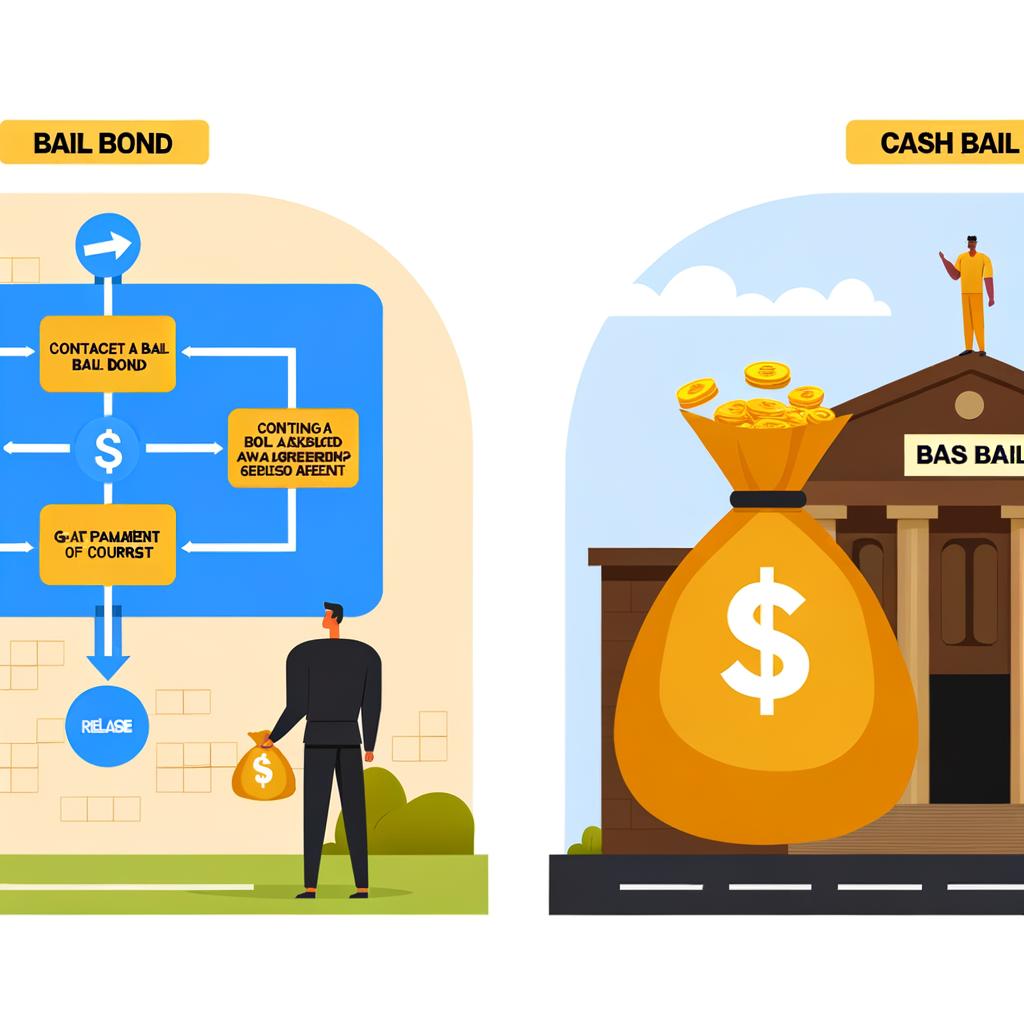
A business bail bond is a debt item worn lawful garments. The company promises the court the complete bail amount if the accused skips, and it charges a nonrefundable costs, normally around 10 percent of the bail, to take on that threat. The firm then takes care of that risk via underwriting, security, and supervision. Criminal history is central to all three.
Underwriting asks an easy inquiry: if this person was released previously, did they return promptly? A bail bondsman scanning a rap sheet tries to find warnings. Multiple failings to appear signal a likely loss. Prior bond forfeits in particular can be invalidating, and some agencies will certainly not write at any kind of rate. Open up warrants in an additional county or state recommend a danger of detention in other places, which can complicate court appearances. An existing probation or parole standing can cut both methods. On the bonus side, guidance ties the person to the jurisdiction and adds structure. On the minus side, probation violations show noncompliance, and a new apprehension can activate a hold that stalls launch or puts the accused back into protection even if the new bond is posted.
Collateral is the 2nd lever. For an accused with a light or clean background, a signature bond with a cosigner, or a modest piece of security like an automobile title, could be sufficient. Add prior nonappearance or recent revocations, and the agency commonly demands stronger security: home equity, multiple cosigners with constant revenue, or cash. The costs itself could continue to be the statutory price, but the collateral cushion grows.
The 3rd lever is supervision. Agencies establish their own check-in schedules, often with in-person coverage, telephone call, or electronic suggestions. A history populated with missed court days or warrants virtually assures tighter guidance: more regular check-ins, more stringent traveling limitations, and requirement to alert the office prior to any relocation or work change. Some agencies companion with checking suppliers for GPS or text-based conformity tips, costs that the defendant or family members will bear.
How various types of prior situations evaluate on risk
Not all documents bring the same weight. The nature of the previous infraction matters, yet so does recency, pattern, and what took place throughout pretrial in those cases.
- Prior failures to appear: This is the solitary greatest forecaster in several threat designs. One missed date can be gotten rid of with documents, like a medical facility document or proof of incarceration on another matter. Chronic misses, particularly throughout various courts, crater the underwriting account. Agencies occasionally compose these bonds only with high collateral and a co-signer that can credibly manage the defendant's schedule. Prior bond revocations or forfeits: If a court formerly revoked bond because of violations, anticipate the court to enforce stricter problems and the bail bondsman to either decline or need significant security. A forfeiture that was later on set aside might still show up on the record, and it will certainly welcome questions. Violence and tools history: Also without a sentence, an arrest involving a firearm or significant injury draws focus. Courts lean toward greater amounts and controls like no-contact orders and GPS. Bondsmen worry less regarding risk in the abstract and much more concerning whether more stringent conditions make compliance harder. GPS failings can cause quick warrants, which equates to threat of forfeiture. Drug distribution or trafficking: Large-quantity cases signal both public security problems and, in some judges' eyes, accessibility to resources that help with trip. Add prior comparable instances, and apprehension becomes more probable in government court. In state court, this background usually brings about higher bond and testing conditions. Agencies will ask pointed inquiries about work, housing stability, and who will guarantee the defendant day to day. Old, small misdemeanors: A shoplifting sentence from 12 years ago hardly ever drives bail choices by itself. What issues is whether there is a pattern that continued and whether the person has shown compliance recently. A long quiet period helps.
The causal sequence of probation, parole, and various other holds
An usual shock for households is the hold. The defendant blog posts bail on the new situation, yet a probation officer places a detainer, or another area asks to choose the individual up on a warrant. In practical terms, this means the individual does not go out, and the bail on the new situation might continue to be published while the person rests on a various issue. From a bail bondsman's point of view, a hold can be both excellent and negative. Great, due to the fact that the person is not free to take off. Negative, because when the hold gets rid of, the clock begins ticking on the next court appearance, occasionally with extremely brief notice.
When a document shows energetic guidance or a pending infraction hearing, communication comes to be the lifeline. Defense attorney and the bail bondsman should coordinate with probation to understand the schedule. I have seen offenders miss out on a new accusation since they were delivered late from a probation keep in an additional county. The court released a bench warrant, and the bondsman had to relocate quickly to prevent a forfeit. All of that was preventable with a one-page notice filed in advance.
Premiums, discounts, and where background plays a minimal role
In most states that permit industrial bond, the costs price is set by law or law. Ten percent is common, with a minimal cost flooring on small bonds. Agencies may offer layaway plan, normally with a down payment and weekly or twice monthly installations. Criminal history seldom changes the costs price itself, since that would violate the submitted price. Instead, history drives collateral choices, co-signer demands, and whether an agency will compose the bond at all.
Where history can affect expense remains in supplementary costs. If the agency requires GPS monitoring or enhanced coverage, the accused might be responsible for those supplier costs. Missed check-ins can cause late charges, and reinstatement costs can use if the court forfeits and later sets aside the bond. Review the agreement very closely. If the record recommends more stringent oversight, expect even more line items.
How families can prepare when background is a hurdle
When the record is made complex, preparation beats persuasion. Bring papers. Arrange days. Fill in voids prior to anybody asks. A brief package can alter the mood in a bail bondsman's office or in a judge's chambers.
- Gather evidence of connections and stability, such as pay stubs, lease or home mortgage statements, institution registration for children, and letters from employers. Concrete supports decrease the regarded trip risk. Document prior failings to appear with descriptions: healthcare facility records, imprisonment records, or docket hard copies showing same-day disputes. One web page of proof is far better than ten minutes of talk. Identify strong co-signers with validated income and secure addresses. A trusted co-signer can counter a spotty document better than a pile of personality letters. Map the next 90 days of court days and supervision visits throughout all territories. Program that you understand the routine and have transport and back-up plans. Be candid about past disobedience. Bondsmen and judges do not anticipate excellence, yet they do expect honesty. If you hide a prior warrant and it surfaces later on, trust fund collapses.
What danger assessments do, and do not, capture
Many jurisdictions use pretrial risk devices that rack up offenders on history and demographics like age and home security. These tools frequently evaluate failures to show up and previous convictions heavily, and they can advise launch, monitored release, or detention. They work, but they are not destiny. A defendant with a middling score can still win release with a plan that binds them to the neighborhood and manages risk chauffeurs. On the other hand, a high score does not assure apprehension if the judge thinks targeted conditions will suffice.
For bond agencies, formal risk ratings matter much less than the underlying truths. Two people can share the same score and existing extremely various accounts. One might have missed out on court due to homelessness and now has stable real estate and a case manager. The various other might have hopped territories repeatedly. A skilled representative pays attention for verifiable adjustment: a new job with pay stubs, a lease with a dependable roomie, a moms and dad happy to co-sign and hold the cars and truck keys if necessary.
Repeat customers, repeat lessons
In counties with busy dockets, agencies build deep files on repeat customers. That history cuts both means. An agency that saw someone through 3 prior cases without a misstep might flex on collateral, despite a brand-new arrest. On the various other hand, the same firm might decline somebody after a solitary disappointment that set you back weeks of legwork to fix a loss. Agencies remember that took their phone calls and who disappeared when points went sideways.
One situation that sticks to me entailed a boy with 2 prior violations and a felony medicine situation. He had two missed out on court days in the previous year. The first quote from a bail bondsman required full security against a $50,000 bond, which the family did not have. We sat down with a schedule, called the staff, and pulled records: one missed date lined up with a hospitalization, the other with a transfer in between prisons on a probation hold. We presented discharge papers and reserving logs, aligned a co-signer with a stable union job, and recommended twice-weekly check-ins plus GPS for 60 days. The firm composed the bond with a lorry title and a small money deposit. He made every look, and the GPS came off after two months. None of that eliminated the past, however it reframed it with details that responded to the risk.
The difficult stop: when history sets off legal apprehension or no-bail holds
Some circumstances bypass discernment. Particular charges carry statutory no-bail guidelines, often connected to resources offenses or repeat violent criminal offenses. Probation or parole holds in many states block release up until a hearing. Immigration detainers can make complex launch, specifically if elimination procedures are underway. If the document causes one of these, an industrial bail bond can not resolve the trouble. The very best move is to concentrate on the quickest course to a hearing on the hold. Defense attorney can occasionally series occasions to make sure that the person is punished or has the offense solved in such a way that permits simultaneous time or prompt parole testimonial. Households who understand the statutory obstacles avoid investing cash on a bond that will certainly not bring about release.
Transparency in the bond arrangement matters a lot more when history is heavy
Bail bond documentation is thick. Review it anyhow, line by line. Where history is a concern, the agreement will usually consist of specific responsibilities: regularity of check-ins, approval needed for traveling, immediate notification of authorities get in touch with, and consent to surrender if problems are breached. If you do not comprehend a term, request for a plain-language explanation https://simonbtnd432.yousher.com/bail-bonds-for-felony-vs-offense-charges and get it in composing. A common rubbing point is who spends for recovery prices if a defendant misses out on court. Some contracts move a wide set of expenses onto the signers. If the record mean possible missteps, bargain caps or clarify what qualifies as a "avoid" versus an excused absence.
Equity concerns, and what defendants can control
Criminal background typically correlates with hardship, unsteady housing, and restricted access to guidance early in a case. That reality shows up starkly in bail choices. Individuals with records are more probable to rest longer pretrial, also on minor charges, simply due to the fact that the system reviews their history as threat. There is no simple fix within the four wall surfaces of a bond workplace, however there are useful actions that enhance results: secure a stable mailing address or P.O. box for court notifications, sign up in message reminder programs where readily available, and assign one member of the family as the interactions hub for court, guidance, and the bondsman.
When feasible, deal with old warrants prior to a new arrest lands. Cleaning a five-year-old failing to show up on a low-level instance can shave thousands off collateral demands later on. Lawful help centers and public protector outreach events occasionally run warrant amnesty days. Benefiting from those is among the greatest ROI relocates a person with a record can make.
How lawyers and bail bondsmans work together when background makes complex bail
A great defense attorney expects the bond hearing with the exact same roughness as a movements calendar. That indicates event records, prepping a release strategy, and pre-negotiating with a reliable bondsman if commercial bail is most likely. The lawyer can offer the court with a package: proposed problems tailored to the background, a letter from the employer, evidence of program enrollment, and, where needed, a letter from the bail bondsman verifying security and oversight. Juries react well to framework backed by specifics.
On the bondsman side, the best firms aim to be companions rather than gatekeepers. They clarify ahead of time what the record indicates for collateral and check-ins, they flag prospective holds, and they tell the truth when a bond is not feasible. When a defendant's background is harsh but not hopeless, creative yet responsible options can link the gap: organized collateral that releases as milestones are met, a temporary general practitioner demand connected to employment verification, or a co-signer alternative if the first endorser loses a work. None of this is charity. It is pragmatic threat administration informed by experience.
Edge situations that resist the usual patterns
A couple of scenarios come up usually sufficient to require special attention.
- Interstate history: A document in one more state can be slow to surface in regional data sources, which develops timing catches. If you recognize there is a prior case in other places, reveal it to the bail bondsman. Shocks after uploading are expensive. Bring docket numbers and get in touch with info for the other court. Name and identity issues: Usual names produce false positives for failures to show up or warrants. If the document appears wrong, request for identifiers like date of birth and last 4 of the SSN to be examined, and offer finger prints or documents to deal with the file. Cleaning an incorrect FTA can change a judge's mind on the spot. Old juvenile cases: Depending on the state, juvenile adjudications might be secured or may still inform danger analyses in wide strokes. If a juvenile record included violence, a court might still turn towards problems, however a tidy adult record helps. Mental health history: Courts are significantly ready to utilize treatment-based problems. A past of unaddressed mental wellness crises that triggered missed court dates looks different when the defendant has an intake appointment and a caseworker aligned. Bondsmen will certainly often problem release on evidence of ongoing therapy conformity when the document suggests this is the main threat driver. Military solution and VA connections: Professionals with service-connected concerns and a VA situation manager can provide a solid release plan, despite having previous missteps. Documentation of advantages, real estate with VA programs, and case administration contact info can get rid of apprehension rooted in the past.
What success looks like after release
A solid beginning issues. The first 2 weeks after publishing bail commonly set the tone. Defendants with a document need to treat this period as a probation outfit rehearsal. Attend every consultation early, maintain a log of contacts, and over-communicate. If transportation is unstable, ask the bail bondsman regarding rideshare coupons or arrange carpools with household. If a condition proves unfeasible, such as a time limit that encounter a night shift, alert advise right away. Courts are extra going to change problems proactively than to forgive infractions after the fact.
Success is not attractive. It appears like silent regularity: phone alarm systems for check-ins, a binder with copies of notifications, and calendar reminders shown a co-signer. It looks like calling the bail bondsman the day before court to confirm time and courtroom, and texting a photo after leaving the court house. It resembles appreciating the limits in the contract, even when they feel inconvenient.
The bottom line
Criminal background does not compose the whole story of bail, however it inks most of the margins. It affects the court's calculus, the prosecutor's disagreements, the threat tool's rating, and the bail bond company's determination to prolong credit report. The influence is biggest when the history reveals absence or disobedience. Yet a thoughtful plan, backed by records and reliable individuals, can blunt the sharp sides of the past.
If you find yourself navigating bail with a document in the background, concentrate on what you can manage: reveal truthfully, organize evidence, select a bondsman that discusses terms and risks without sugarcoating, and build regimens that make conformity nearly automated. In the bail world, trust fund is earned in days and lost in mins. An excellent strategy tilts the equilibrium, one verified detail at a time.
ABBA Bail Bonds 900 Avila St STE 101 Los Angeles, CA 90012 (213) 296-0901 https://abbabailbonds.com